
What are the 2025 SEO trends? How should you prepare? With the comprehensive upgrade of AI search technology and Large Language Models (LLMs), the focus of SEO is gradually expanding from keyword optimization to trust building, multi-platform data management, and user experience enhancement. The following analyzes SEO trends from the perspectives ofContent、Technical Aspects、Business StrategyandAI Trends, and compiles12 specific SEO strategiesto help you stand out in the digital transformation battle!
Content: Enhance content value and trust to meet user and search engine needs
1. Upgraded Keyword Strategy: Topic Clusters to Improve Content Quality
Keyword strategy no longer solely focuses on the performance of a single article but systematically revolves around topics.Content Clusterlayout strategy. From the Core Topic, we can derive the following content clusters:
| Content Cluster Model | Goal | Use Cases |
|---|---|---|
| Pillar Content | Mastering the Core Content of a Topic | “SEO Starter Guide” |
| Cluster Content | Analyzing Related Niche Areas | “SEO Tool Recommendations”, “Keyword Research Techniques” |
| Links | Improve the Clarity of Your Theme Structure | Link Back to Pillar Posts in Sub-Content |
Optimization Suggestions:
- Write core pillar articles that comprehensively cover the core knowledge of a topic, attracting users to explore the website content in depth.
- Write sub-content targeting long-tail keywords, segmenting audience needs, and forming a comprehensive content structure.
- Set up internal links to strengthen the relevance between content and help search engines clearly understand the website structure.
2. Provide Authoritative Data Sources: Make Your Content AI’s First Choice
AI search engines (such as ChatGPT, Perplexity) rely on the completeness and authority of data sources to generate responses.
Implementation Suggestions:
- Cite Industry Data:Provide highly credible professional research reports, white papers, or statistical data to build trust in the content for both search engines and users.
- Multi-Platform Optimization:Ensure content performs well on Google and Bing, increasing the chances of being cited by AI tools.
3. Personal IP Strategy: The Best Vehicle for Trust and Professionalism
Users are more likely to trust content with a personal background, and Google also prefers content written and attributed to experts. This trust signal can effectively improve a website’s SEO performance.
Optimization Suggestions:
- Expert Attribution:Showcase the author’s background and achievements in articles, and provide relevant professional certificates or experience to support them.
- Short Video Creation:Share insights on YouTube Shorts or Instagram Reels to increase brand recognition.
- Integrate Brand Story:Use real cases and storytelling content to enhance users’ emotional resonance.
Recommended Reading:What is YMYL? Improve Website Professionalism and Trustworthiness: A Must-Know Analysis of E-E-A-T Quality Guidelines
4. External Link Strategy: Winning with Relevance and Quality
External links are a crucial way to build website trust signals, especially recommendations from high-authority and highly relevant websites, which can significantly improve a website’s SEO performance.
| Types of External Links | Application Scenarios | Implementation Strategy |
|---|---|---|
| Industry Collaboration Links | Collaborate with high-authority industry websites to co-publish content. | Publish joint reports, expert interviews, and attract external referral links. |
| News Exposure Links | Mention your brand and content in mainstream media to gain link support. | Published in media such as Yahoo and CommonWealth Magazine to enhance brand credibility and trustworthiness. |
| Naturally Generated Links | Create high-value data or tools to attract organic website citations | Provide unique data tools, industry whitepapers, or guides to increase the likelihood of natural link generation. |
Additional suggestions:
- Strengthen link diversity:Actively seek collaborations with authoritative industry websites and regularly create high-value content to attract natural links.
- Targeted link building:Find websites that align with your target market to ensure that the traffic brought by links has high conversion potential.
Technical aspects: Dual improvement of structured data and user experience
5. Optimize user experience: Speed and interactivity are key
Google’sCore Web Vitalsclearly indicate that website performance and user experience are important factors affecting rankings.
Improvement Suggestions:
- Improve page loading speed, keeping loading time within3 seconds, and use CDN and image compression technologies (such as WebP format).
- Enhance the mobile browsing experience by using responsive design and avoiding pop-ups that interfere with user operations.
- Increase interactive elements (such as Chatbot) to enhance user engagement and extend dwell time.
6. Strengthen Structured Data Markup: Improve Search Engine Understanding
Structured data is a core technology that helps search engines understand content, increasing the likelihood of a website appearing in featured snippets.
Implementation Suggestions:
- Product and Service Markup:Add JSON-LD markup to detail pricing, reviews, and inventory information.
- Event Markup:Add tags to event pages to clearly display time, location, and registration methods.
- FAQ Schema:Add structured markup for FAQs to improve visibility in search results.
7. Regularly Review External Links: Maintain a High-Quality Link Ecosystem
External links need to be regularly reviewed for relevance and quality to avoid negative impacts from low-quality links on the website.
Operational Suggestions:
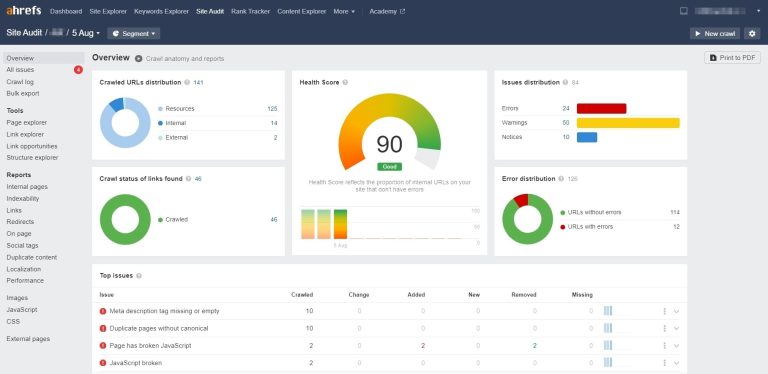
- Use tools such asAhrefsorSEMrushto analyze link sources and authority.
- Identify low-quality or invalid links and use search engine disavow tools (Disavow Links) to remove them.
- Find alternatives for broken links to ensure content traffic and SEO performance are not affected.
Business Strategy: Deep Integration of SEO and Business Goals
8. Integration of Private Traffic and SEO: Reduce Marketing Costs
SEO brings stable organic traffic, and converting this traffic into private domain users (such as Email, LINE Official Account) can significantly reduce marketing costs and increase repurchase rates.
Strategic Recommendations:
- Offer free resources (such as e-books or coupons) to attract users to subscribe to private channels.
- Use Email marketing or LINE Official Account to distribute high-value content and increase user engagement.
- Combine GA4 data analysis to track and optimize the conversion rate of users from SEO traffic to private domain registration.
9. Enhance Business Signals: Combine SEO with Brand Value
Websites with business services or social influence are more likely to gain search engine trust and improve rankings.
Implementation Suggestions:
- Improve your Google Business Profile:Ensure business information is complete and frequently updated, and increase user reviews and image displays.
- Participate in community interaction:Share content on forums or social platforms (such as Facebook, Reddit) to increase brand mentions and exposure.
- Create Case Studies:Write user success stories or service experiences to deeply embed the brand’s professional image in people’s minds.
10. SEO is a tool, not a goal: Start from business needs, return to the essence of business
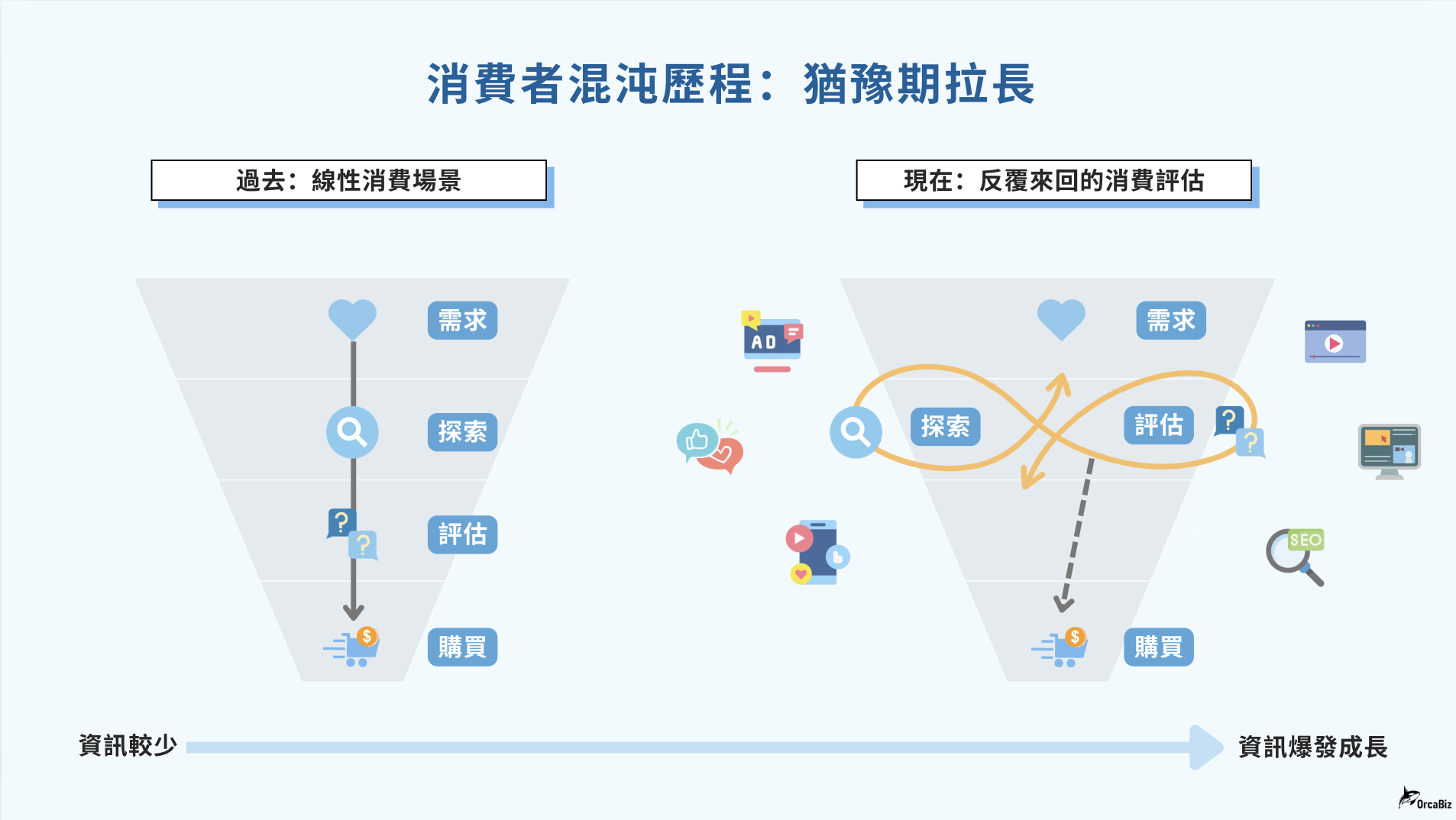
SEO is used to assist marketing, and the purpose of marketing is to serve the brand’s business needs. Brands should not get lost in a single SEO strategy, but shouldfocus on core business values, starting fromuser needs, combined withmultiple marketing methods, to achieve true business growth.
In theconsumer’s chaotic purchasing journey, consumers won’t rely on a single channel to decide whether to make a purchase or engage with a brand. Therefore, you shouldn’t solely depend on one marketing method. Instead, with limited resources, you shoulddeploy multiple channelsto accelerate business growth. If all resources are concentrated on SEO, any fluctuation in algorithms could have a huge impact on the business.
Therefore, brands should focus on doing the business itself well, includingbrand positioning, user research, product developmentanddiversified marketing channel deployment. SEO is a part of assisting these efforts, not an end in itself.
Implementation Suggestions:
- Focus on user needs:Create content that solves specific user problems, attracts organic traffic, and provides real value.
- Integrate marketing methods:Integrate SEO with strategies like social media marketing and email marketing to build a complete user journey from exposure to conversion.
- Data-Driven Decisions:Utilize analytics tools like GA4 to track website traffic sources and user behavior, and use this to evaluate the value of SEO in driving business growth.
AI Trend Aspect: Exploring Future Changes in Search Technology
11. Multi-Platform Search Entry Point Layout: Comprehensive Coverage from Google to AI Tools
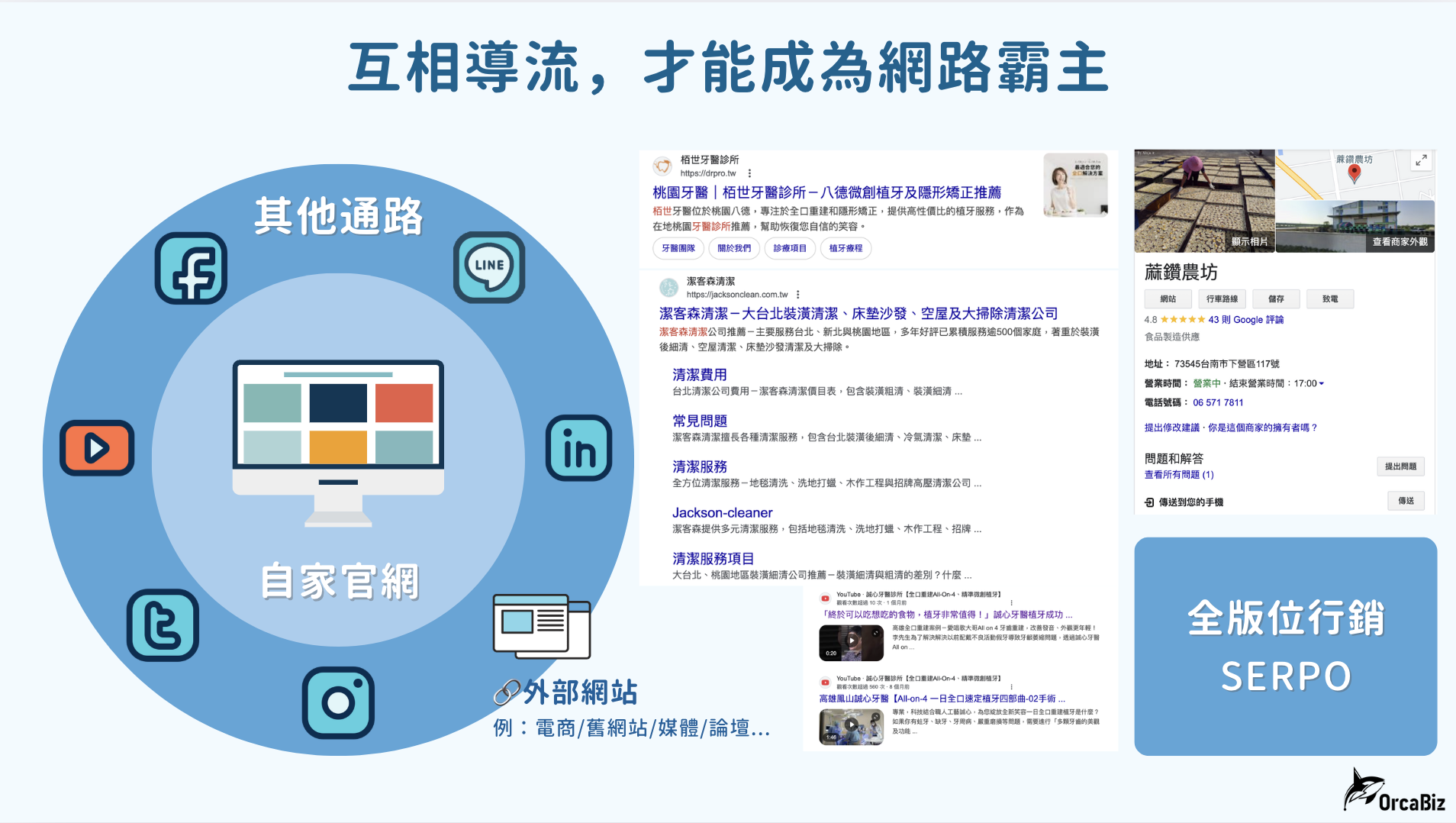
AI search tools (such as ChatGPT, Perplexity) and voice assistants (such as Alexa, Siri) are redefining the search ecosystem. Businesses need to lay out multi-platform search entry points, constantly observe how data is presented across platforms, and seize emerging search traffic sources.
Implementation Suggestions:
- Multi-Platform Content Optimization:Ensure that the website performs well in search results on Google, Bing, and AI tools, especially optimizing for the Bing API to increase the likelihood of content being cited.
- Explore the application of AI Agents to enable website content to support users in completing action-oriented tasks (such as one-click purchases or bookings).
- Enhance API integration capabilities to ensure website content can operate seamlessly across different systems and tools.
12. Make Good Use of AI Tools and Data-Driven SEO: Improve Content Efficiency and Strategic Flexibility
AI tools (such as ChatGPT, Claude) can significantly improve content production efficiency and provide real-time adjustment suggestions based on data, making keyword layouts more aligned with market demands.
How to achieve efficient and flexible SEO strategies:
- Make content creation easier:Use AI tools to quickly generate content drafts and outlines, thenmanually refine to ensure data accuracy, and add depth and professionalism. The completed content can also be extended into multimedia forms such as short videos, podcasts, or infographic cards, allowing the brand to reach audiences through more channels.
- Drive adjustments with data:Combine analytical data from GA4 and Google Search Console to observe user behavior and content performance. AI tools can help quickly identify reasons for traffic decline and provide specific optimization suggestions, making content direction more precise.
- Real-time updates on popular topics:No need to painstakingly guess market trends; AI tools can quickly analyze search hotspots and industry changes, helping us adjust pillar articles or add relevant content in a timely manner, keeping the website always in sync with user needs.
13. AI Search and Voice Search: Planning ahead for future use cases
Voice search and natural language processing are becoming one of the main forms of user search, especially on mobile devices and in smart homes, where the demand for instant answers is increasing.
Implementation Suggestions:
- Natural Language Optimization:Use keywords that are close to users’ daily conversations to meet the needs of voice search and long-tail queries. (For example: How to clean renovation dust? What to do for a stomach ache in the middle of the night?)
- Voice Search Application Scenarios:Provide efficient content solutions with quick responses for real-time queries (e.g., “nearest restaurant” or “today’s weather”).
- Multilingual Support:Design voice-friendly multilingual content, combined with hreflang tags, to attract more traffic from international markets.
Conclusion: Comprehensive Integration of Content, Technology, and Business Strategy
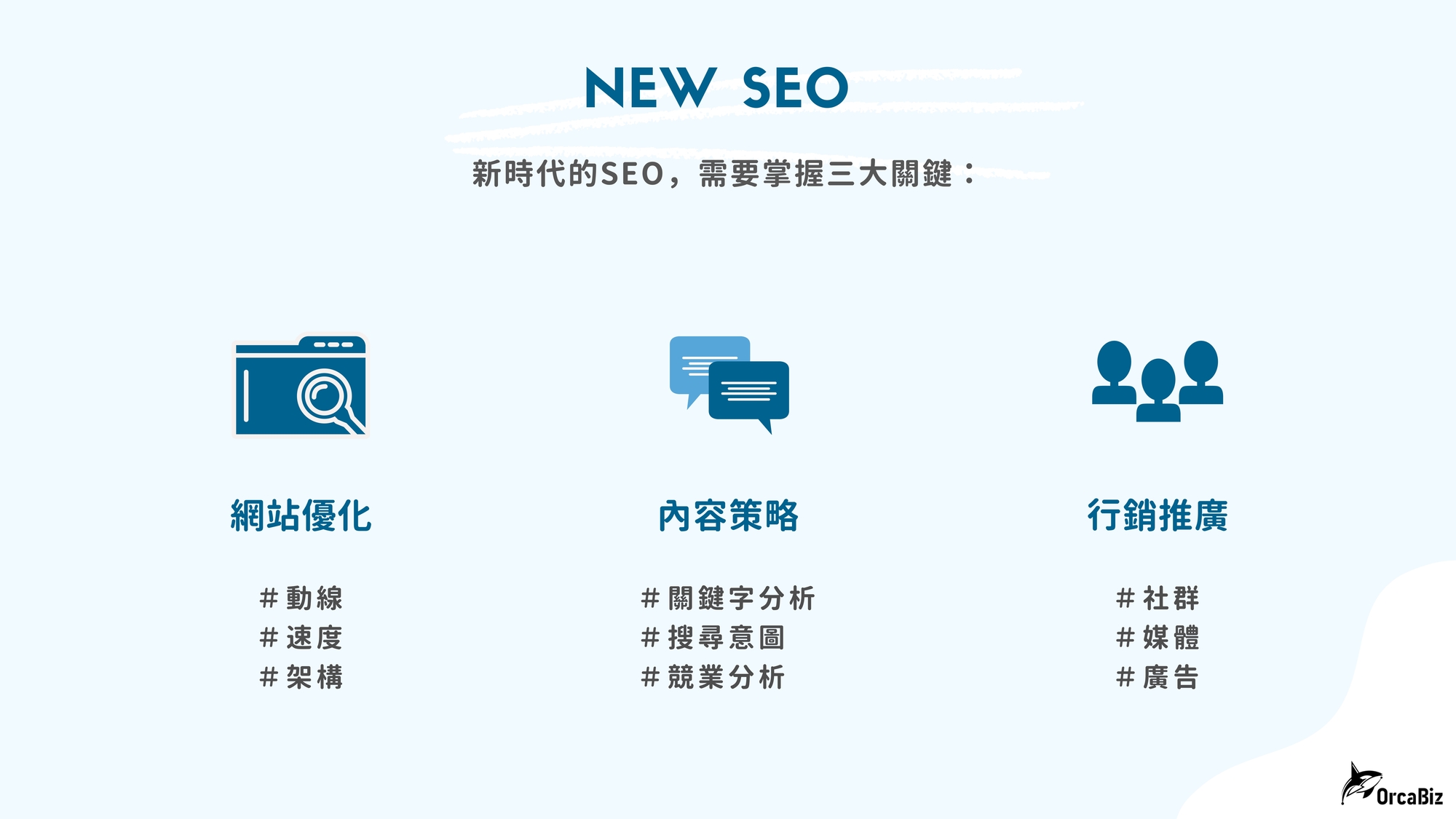
The future of SEO will be driven by the technological advancements of AI search engines and the diversification of user needs. In this comprehensive competition, brands need to integratecontent value, technical strength, business signals, and AI trend planningto firmly establish a leading position in the industry. SEO is no longer just a ranking tool; it is a strategic core for shaping brand trust and value.