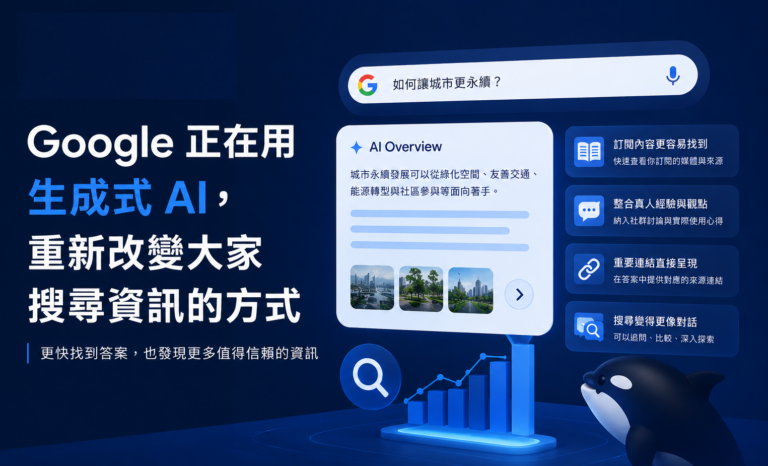

In the past, most people used search engines by typing a keyword, clicking a website, and slowly digging for the answer. Today, generative AI is changing what search feels like.
Google has been steadily improving features like AI Mode and AI Overviews. The best thing about these AI experiences is that they help you find reliable information and the original content worth reading more quickly.
Recently, Google’s official blog shared several new AI search features. The core idea is simple: search is no longer just about finding an answer, but about understanding the question faster and discovering better content.
Here are five ways AI search is changing the web today.
You may also like:
What is Google AI Mode? The Traditional Chinese version is now live
SEO in the AI Overviews era: how content should change after Google AI Overviews

1. AI search does not just answer, it helps you explore deeper
Before, a search result was mostly just a list of links. Now AI search feels more like someone has already organized the key points for you and is saying, “If you want to go deeper, take a look at these too.”
For example, if you search for “urban greening,” AI might not only explain the concept, but also point you to real-world cases such as the Seoul river restoration or New York’s High Line Park, so you can keep digging deeper.
It feels like your search engine is slowly turning into a research assistant.
2. Subscribed sources are easier to find
Your favorite brands and media outlets should be easy to find.
Google has introduced a feature that highlights links from your news subscriptions inside AI Mode and AI Overviews.
That means you can get to trusted sources faster and get more value from the content you already subscribe to.
Google’s own testing showed that users are more willing to click when they see the “Subscribed” label.
This also tells us something important: in the AI era, reliable sources will matter even more.

3. AI starts organizing real human experience
When people search for information now, they often want what real users actually say more than a formal explanation.
To surface the most useful experience-based content, AI responses now include preview snippets from forums, social platforms, and other first-hand sources.
These links may also show extra context, such as the creator’s name, account, or community name, so you can judge whether the source is worth opening.
For example, if you are researching how to photograph the aurora, you might see a forum post where someone shares exposure settings, along with a direct link to the full thread.
In short, search results are no longer just about websites. They now include human perspective.
4. Important links now appear directly inside the answer
In the past, you often had to open many tabs to find the right information.
Now, to help you explore useful sites more easily, AI responses show more links alongside the content, and those links are tied to specific parts of the answer. If something interests you, you can click through right away.
For example, if you search for California bike travel, you might see route details with a link to a Pacific Coast bike guide nearby, or training tips next to daily mileage advice.
It is a much more natural reading experience.
5. Google gives you a quick preview of linked pages
To help you understand where a link leads before you click, Google now shows a quick preview in desktop AI experiences when you hover over an embedded link.
You may see useful details like the site name or page title, which helps you decide whether the page is worth opening.
Google found that if people are not sure where a link goes, they are less likely to click it. This update is meant to make it easier to browse helpful sites with more confidence.
Conclusion
Google will continue improving how links are shown and ranked inside AI search. It will also use techniques such as query fan-out to explore the web more deeply and help users discover the most relevant sites.
By making links easier to see, more useful, and more connected to original voices, Google wants AI search to help people discover the web’s richer content and connect them directly to the sources and creators they are looking for.
At the same time, AI search is still a work in progress in the eyes of many users.
Some people like the faster answers, while others miss the classic blue-link search results and even use special parameters to avoid AI summaries.
That shows we are entering a new era where AI helps you find information, but people are still deciding what the most comfortable and trustworthy way to get that information should be.