Do you know how long a new link stays visible online before people stop clicking it? On average, the answer is surprisingly short: less than a day. Different platforms have very different content half-lives, and that has a big impact on how you should plan social content.
Social media platforms have become important places for individuals and businesses to connect, share, and influence. But the content shared on these platforms is shaped by a metric that is often overlooked: the half-life of a social media post. The term originally comes from physics, but it has real value in digital marketing. Understanding it is essential if you want to build a stronger social strategy.
What Is Social Media Half-Life?
Scott M. Graffius first published social media content half-life data several years ago and updated the research again in 2025.
It is the time it takes for a post to earn half of its total engagement, such as likes, shares, and comments.
2025 Social Media Content Half-Life Overview
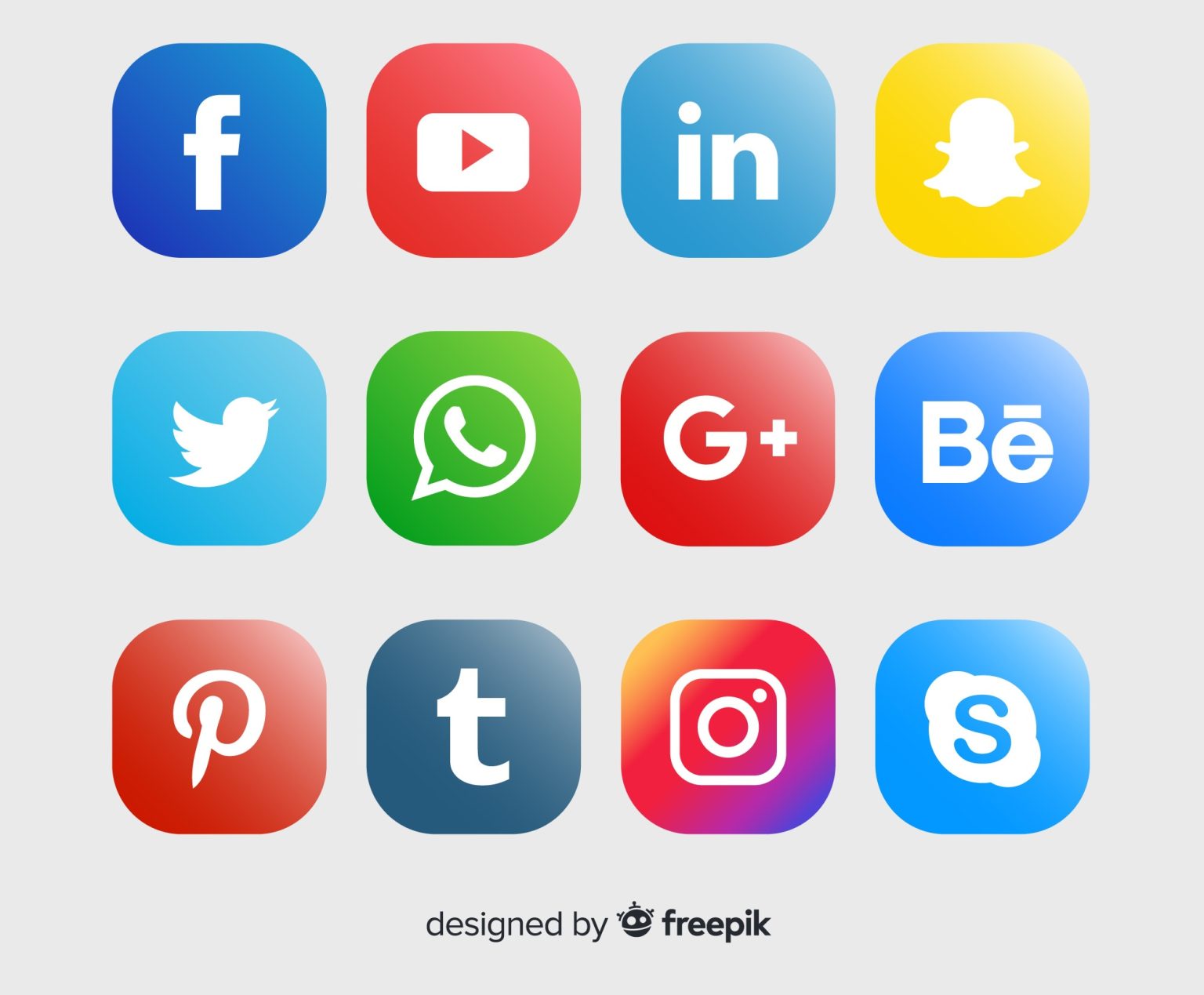
Scott M. Graffius summarized the half-life of content across the following social channels:
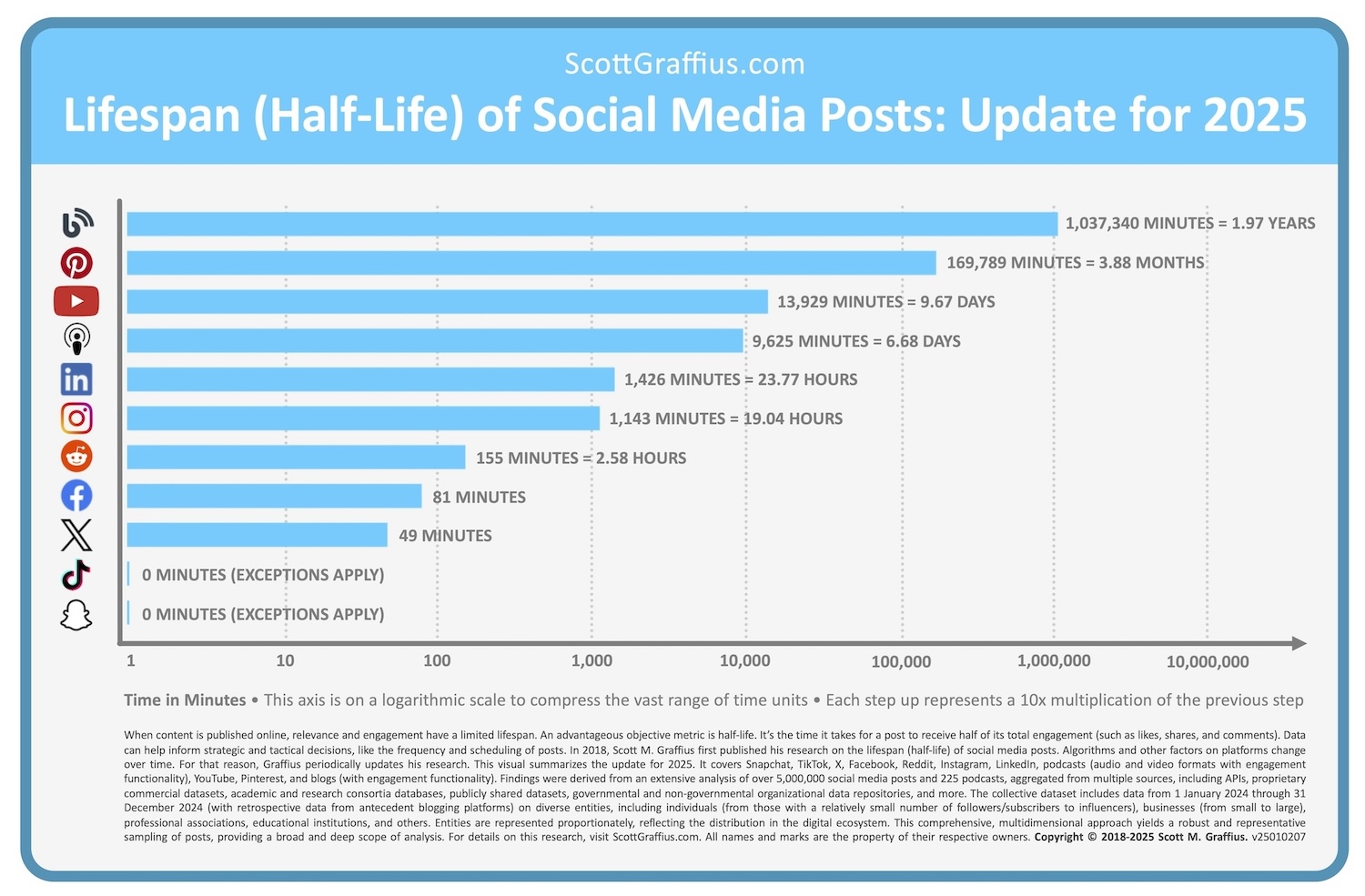
- Snapchat – Posts have almost zero-minute half-life because the platform is built for instant, momentary engagement.
- X (formerly Twitter) – The average half-life is 49 minutes, so timely and frequent updates matter if you want to stay visible.
- Facebook – Posts last a little longer at 81 minutes, which gives brands more room for steady engagement.
- Instagram – Visual content lasts much longer here, with an average half-life of 1,143 minutes, or about 19.04 hours.
- LinkedIn – At 1,426 minutes, or about 23.77 hours, LinkedIn has the longest half-life among the major social networks and supports in-depth professional content.
- YouTube – With a half-life of 13,929 minutes, or about 9.67 days, video content has lasting value and keeps attracting viewers long after publish day.
- Pinterest – Posts can last 169,789 minutes, or about 3.88 months, making it ideal for high-quality visuals that keep earning views over time.
- Blogs – Blog content can last 1,037,340 minutes, or about 1.97 years, showing the long-term value of detailed, informative content.
Each platform has its own rhythm and audience behavior. Understanding those differences helps marketers create messages that keep attention and engagement going over time. From Snapchat’s fleeting moments to the long life of blog posts, tailoring your strategy to each platform can significantly improve results.
When you adjust posting frequency and style to match each platform’s behavior, brands can optimize engagement, respond more flexibly in a crisis, and maintain a stronger digital presence.
Why Does Social Media Half-Life Matter?
Understanding the unique half-life of content on different social platforms is important for building an efficient digital marketing strategy. It helps marketers measure how quickly engagement decays and guides them toward better publishing times and rhythms.
This platform-specific thinking helps avoid two common mistakes: posting too often, which can lead to audience fatigue, and posting too little, which can cause you to miss peak engagement windows.
Half-life is also important in two very different situations:
Crisis: When an issue seems shallow or short-lived, stepping back may be the best move. Letting the platform’s half-life run its course can reduce visibility and avoid unnecessary escalation.
Virality: Viral content creates a great opportunity to amplify a positive message. Additional promotion and targeted ads can help sustain the attention spike and make the most of that momentum.
Understanding how crises and viral moments unfold across platforms is not just helpful, it is a strategic requirement. In a digital environment where news can spread globally within hours, knowing the half-life of each channel can be the difference between a manageable issue and a full-scale crisis, or between a brief viral moment and long-term brand awareness.
This knowledge helps businesses make smarter decisions and actively shape their story in a way that supports long-term goals and values.
In other words, mastering social media half-life is not just about survival. It is about turning fast-moving moments into lasting impressions.
What Factors Affect Social Media Half-Life?
A post can be influenced by many factors. Here are ten to keep in mind:
- Content relevance: Posts that match the audience’s needs and interests tend to last longer.
- Publishing time: Posting when your audience is most active can extend the life of a post.
- Engagement: Posts with strong early engagement often stay visible longer.
- Visual quality: High-quality images, video, or infographics tend to attract more attention and have a longer life.
- Hashtag usage: Strategic hashtags can improve discoverability and extend reach.
- Platform algorithms: Each platform decides visibility differently, so understanding the algorithm matters.
- Audience interaction: Likes, comments, shares, and clicks all affect post lifespan.
- Publishing frequency: Spacing posts out can give each one more attention.
- Content format: Text, image, video, and interactive posts can perform differently depending on audience behavior.
- External events and trends: Timely content can ride current conversations and stay relevant longer.
Adjust Your Posting Frequency
By tailoring your content distribution strategy to each channel’s half-life, marketers can improve visibility, drive deeper engagement, and create a stronger impact. Adjusting your publishing frequency to match each platform is essential for maintaining optimal engagement.
On platforms with short half-lives, increasing posting frequency can help maintain visibility without overwhelming the audience.
On channels with longer half-lives, lowering repetition is often better. That approach keeps audiences engaged over a longer period without causing boredom or irritation.
When you adapt your content and message to each platform’s rhythm and culture, your posts become more relevant and more likely to resonate with the audience.
By aligning your marketing strategy with social media half-life, you can handle crises more wisely, use viral moments more effectively, and fine-tune content repetition so it stays effective across different platforms.
References: