Typing as fast as you talk is no longer impressive. What is impressive is turning casual speech into clear, polished writing. That is where Typeless comes in.
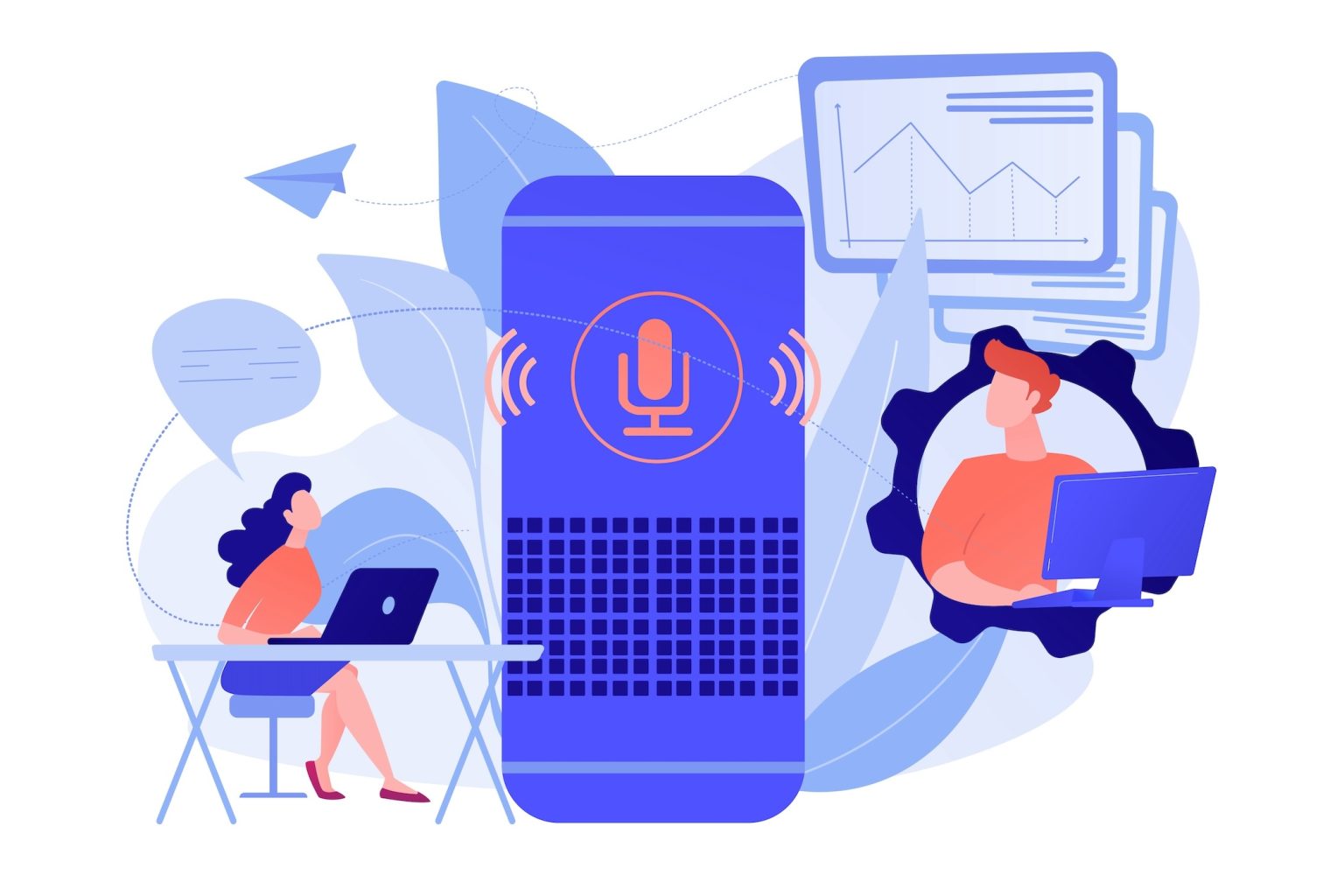
Typeless is a smart AI voice dictation tool. You speak naturally, and it turns your words into polished messages, emails, or formal documents in real time. It reads like something you wrote yourself, but it is much faster than typing.
What is Typeless?
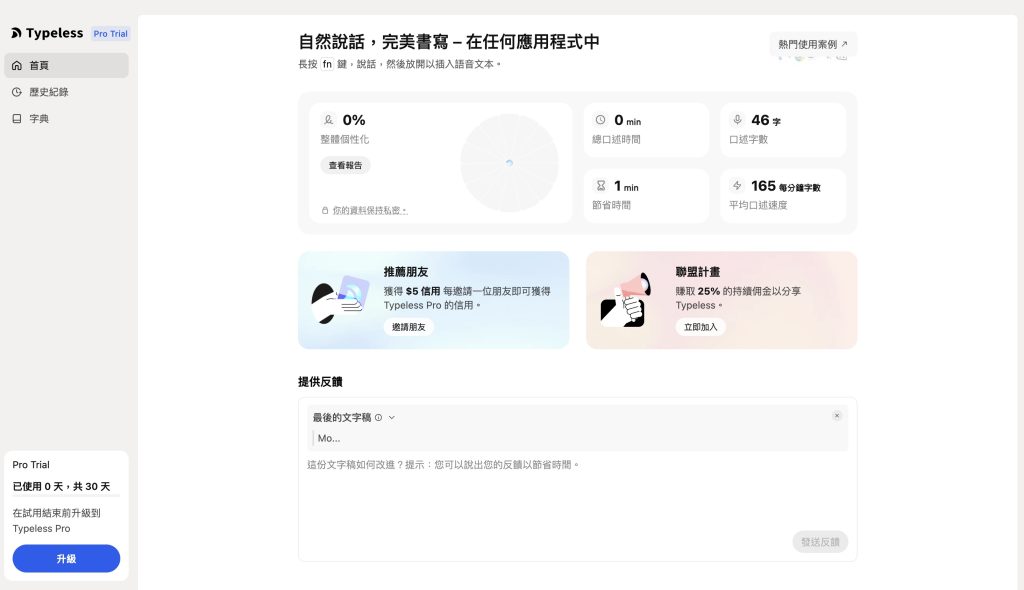
Typeless is an AI voice-to-text productivity tool designed to replace typing with speaking. It does more than transcribe speech. It understands meaning, removes filler words, reorganizes structure, and improves sentence flow so the output is cleaner and more professional.
The biggest benefit is not just speed. It is the time saved by reducing correction and editing work.
A lot of voice typing tools are fast, but they do not understand intent. If a few words are wrong, you have to stop, fix the text, and lose your flow. Typeless tries to do the opposite. It understands what you mean, not just every word you said.
Main features
AI voice-to-text with smart cleanup
- Turns spoken words into text much faster than a keyboard.
- Removes filler words like “um” and “uh.”
- Deletes repeated phrases and unnecessary content.
Intent-aware rewriting
- It does not just transcribe. It rewrites your speech into readable text.
- It can adjust tone depending on the situation, such as email, chat, or formal documents.
Formatting and structure
Typeless supports 100+ languages, can handle mixed-language speech, and can organize lists, steps, and key points automatically.
Why is Typeless especially strong for Traditional Chinese?
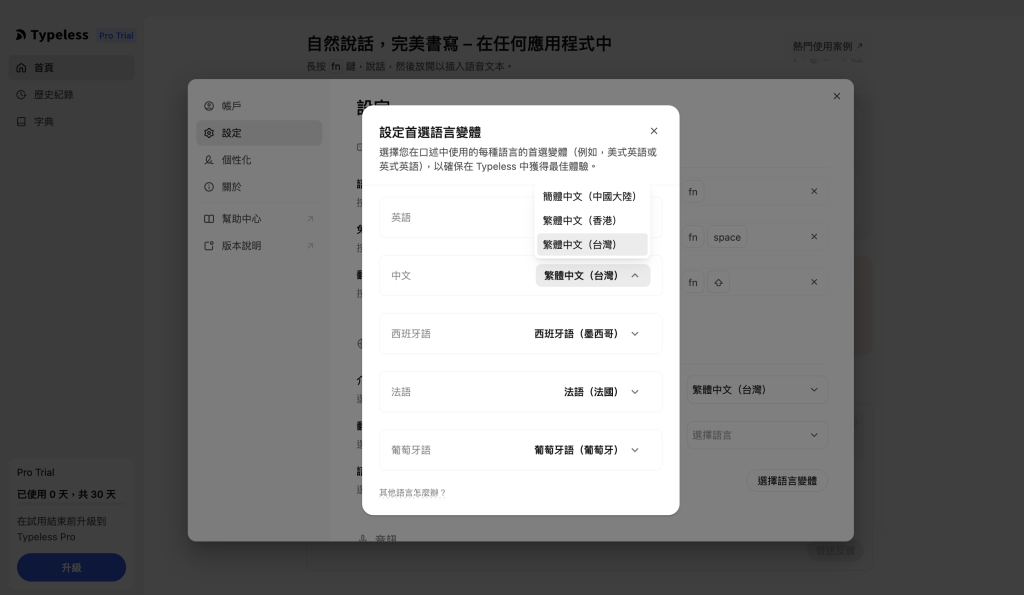
Typeless works especially well for Traditional Chinese because of its language design and processing logic. It handles Chinese speech naturally, which makes it a great fit for people who switch between Traditional Chinese and English during work.
Here is why it stands out:
1. It is optimized for Chinese spoken language
Many dictation tools are built with English-first logic. Typeless treats spoken Chinese to written Chinese as a primary use case.
- It handles Taiwan and Hong Kong style spoken Chinese more naturally.
- It does not force Simplified Chinese word order.
- Its punctuation and sentence breaks feel more natural for Chinese readers.
2. The Traditional Chinese interface is not just a translation
The interface language is written in natural Chinese rather than awkward literal translation, so users do not have to guess what a feature means.
3. It removes Chinese filler words very well
Chinese speech often contains fillers like “um,” “you know,” “actually,” or repeated ideas. Typeless cleans those up, merges repeated thoughts, and keeps the meaning intact.
4. It fits common Chinese workflows
- Work emails
- LINE or Teams messages
- Meeting notes
- Personal notes and ideas
- Quick task capture
In other words, Typeless helps you say things fast and write them well.
5. It avoids common input pain points
Instead of fighting with IME selection, homophones, or slow mobile typing, you can just speak and get usable text immediately.
6. It works inside any app
After installation, you can type into almost any text field, such as Gmail, Google Docs, and chat apps, without switching tools.
You may also like:
Manus AI: Powerful slide and website generation
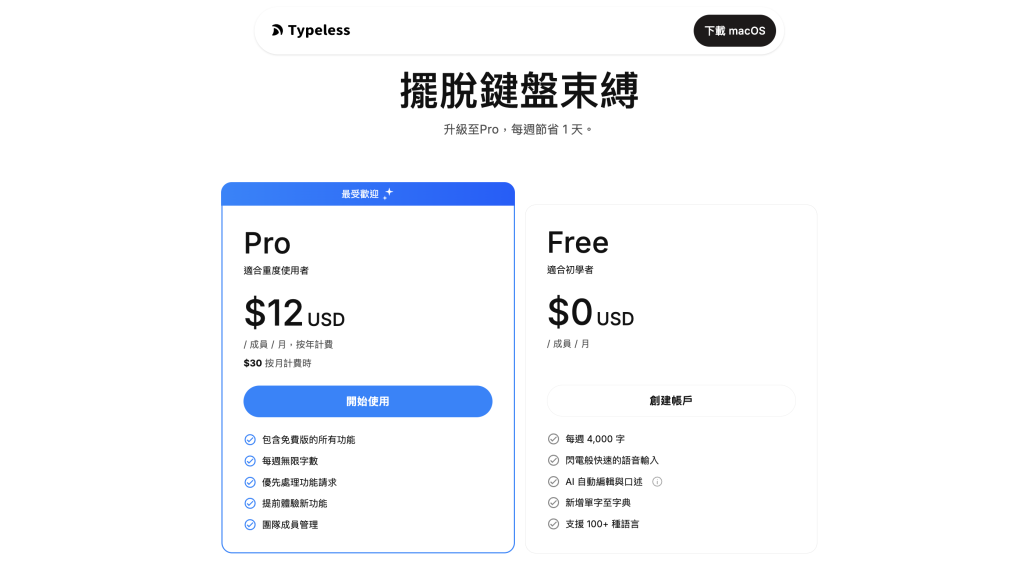
Free vs Pro
Typeless supports iOS, Windows, and Mac, with Android still in development. It can be used in email, LINE, Messenger, and other apps.
Free
- Limited weekly voice-to-text quota.
- Includes AI dictation, automatic editing, language support, and dictionary features.
- Good for everyday use such as messages, notes, and short emails.
- New users usually get a 30-day Pro trial before dropping back to the free plan.
Pro
- Unlimited voice input.
- Priority access to new features.
- Team management support.
- Pricing is around US$12/month with annual billing, or a higher monthly rate.
Privacy
- You can add a personal dictionary for special terms and names.
- Typeless uses a zero-retention policy: voice data is stored locally and is not used to train AI.
Practical take
- Better than traditional voice-to-text tools: it feels more like writing for you than just listening to you.
- Boosts work and creative output: useful for emails, articles, replies, and notes because it avoids typing interruptions.
It is not ideal when every word must be exact, such as legal or technical documents, where manual review is still needed.
Conclusion
Typeless is an AI dictation tool that replaces the keyboard with speech. It does more than convert voice to text. It automatically rewrites and polishes the content so the result is clear, professional, and easy to read.
In short, Typeless is strong not because it hears you, but because it helps turn your Chinese speech into text you can use immediately.
Reference: Typeless official site