In the digital marketing battlefield, how do you capture consumers’ attention at first glance? Google Keyword Ads, as a powerful tool for quickly driving traffic and conversions, are increasingly favored by businesses. However, to stand out in the highly competitive advertising market, merely “running” ads is not enough; strategic design is even more crucial. This article will take you through an in-depth analysis of effective Google Keyword Ad strategies, from ad account structure to keyword selection, helping you create an ad plan that is both precise and cost-effective.
Why Should You Prioritize Google Keyword Ads?
Have you ever searched on Google for “Taipei food recommendations,” “wedding photography prices,” or “laptop repair”? If so, you’ve already participated in millions of Google Keyword Ads. This isn’t just a simple search; it’s a fiercely competitive marketing struggle.
Businesses are willing to invest their budget in buying these keywords on Google because—It works, and it brings actual conversions.This article will delve into why even with a limited budget, small and medium-sized enterprises (SMEs) should prioritize Google Keyword Ads (also known as Google Ads) and begin to strategize for this invisible yet very real “search war.”
What are Google Keyword Ads?
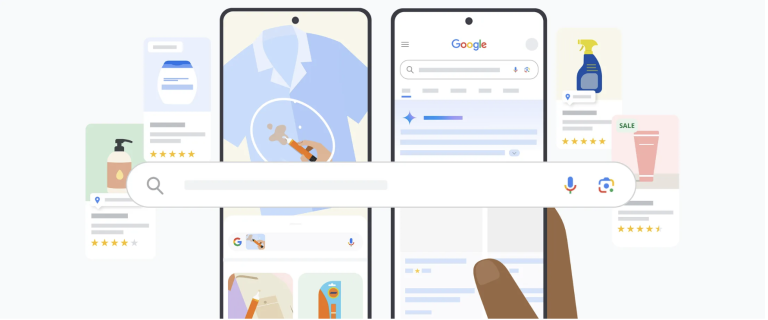
Google Keyword Ads are a paid search advertising service where, when users enter specific keywords into Google, businesses can pay to have their website or product information displayed at the top of the search results, usually marked with “Ad” or “Sponsored”.
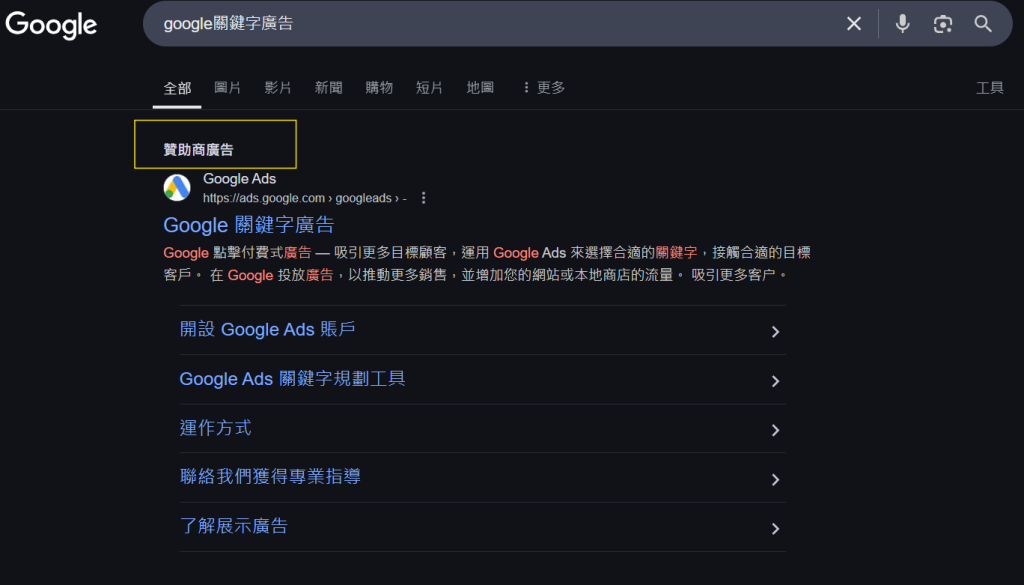
Such ads are pay-per-click (PPC), meaning businesses only pay when a user clicks on the ad. For small and medium-sized enterprises, this is a low-barrier, high-efficiency marketing tool.
| User Behavior | Advertiser Operation | Result |
| Search for “Kaohsiung air conditioner cleaning” | Air conditioning companies that bought this keyword appear | User clicks → Goes to the website |
| Search for “online English learning recommendations” | Cram school places keyword ad | User clicks → Leaves contact information |
Three Major Advantages of Google Keyword Ads
Precisely target customers who are “actively looking”
Google search is highly “intent-driven.” This means that when someone searches for “Taichung moving company recommendations,” they are not just browsing; they are very likely preparing to move. This has greater conversion potential than proactively placing ads for customers who are unfamiliar with the brand.
Flexible adjustment according to budget
Even if you only have an ad budget of NT$200 per day, you can still launch Google Ads. You can set a daily cap to prevent spending from getting out of control and continuously optimize your ad strategy through data.
Transparent data, quick testing
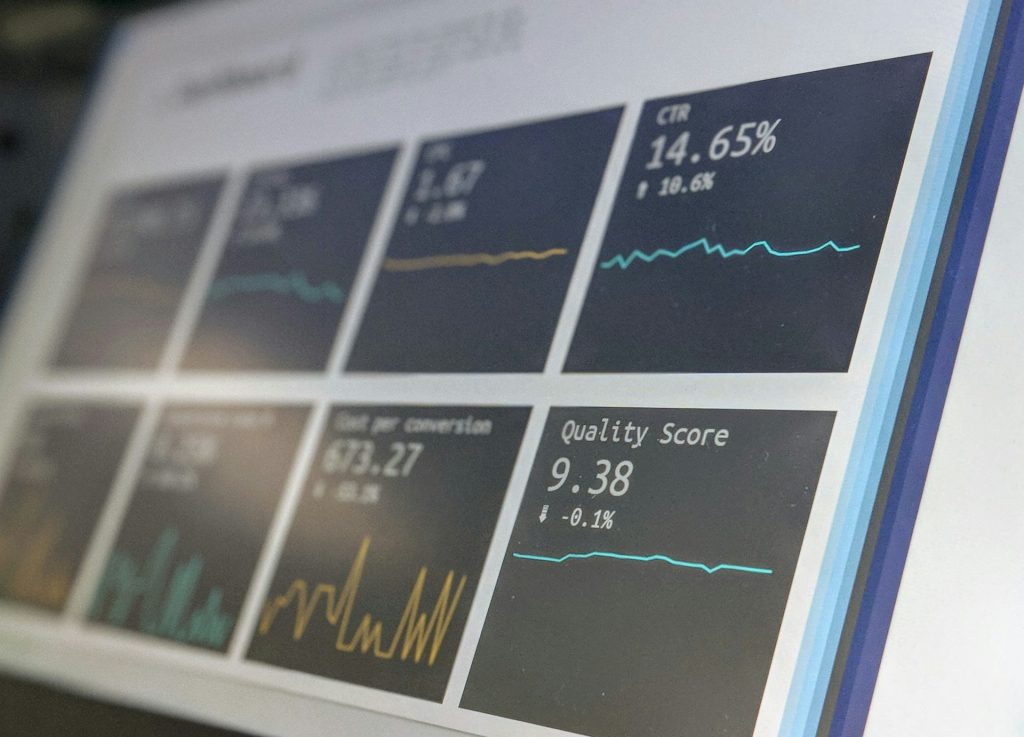
Google Ads provides detailed reports, including click-through rate (CTR), cost-per-click (CPC), conversions, and more, allowing you to clearly see if every penny of your budget is well spent. This level of transparency is difficult to achieve with traditional advertising.
Which industries are suitable for Google Keyword Ads?
| Industry Type | Ad Placement Value |
| Local Services (e.g., plumbing, cleaning) | Can quickly take orders and target local keywords |
| Online Courses / Digital Products | Short conversion process, suitable for immediate sales |
| B2B Solutions | Attract decision-makers with purchase intent through search |
| E-commerce / Branded Products | Combine with Shopping Ads to increase conversion rates |
A common characteristic of these industries is that users typically actively search for products or services. This is where keyword advertising is most valuable—appearing at the right time and in the right place.
How to choose the most suitable keywords?
Add keywords
When planning a keyword advertising strategy, the most crucial step is choosing the right keywords. These words not only determine whether your website will be seen but also directly impact your ad click-through rate, organic search ranking, and even conversion rate.
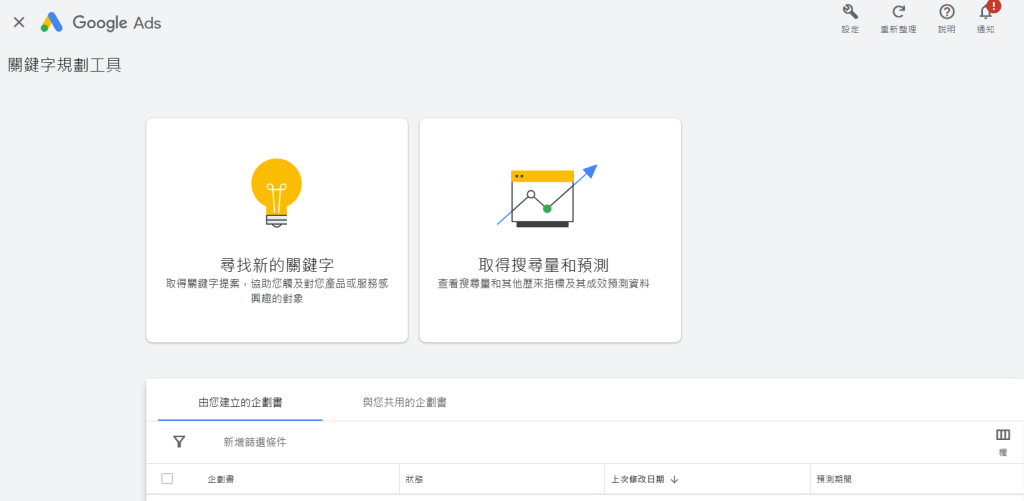
We recommend using the built-in Google Ads backend tool, theKeyword Planner. It’s a very practical free resource, especially its “Discover new keywords” feature, which can help you quickly unearth suitable search terms.
Keyword Selection Direction
| Type | Description | Example |
| Brand Keywords | Branded Keywords | IKEA sofa, Uniqlo jacket |
| General Keywords | Related to products or services, but without brand names | Sofa recommendations, interior design |
| Long-tail Keywords | Lower search volume but clear intent, low competition | Where to buy Nordic style sofas, Taipei woodworking design company |
| Question-based Keywords | In the form of a question, often used in blogs or knowledge-based content | How to clean a sofa? How long does renovation take? |
General keywords, branded keywords: Searchers using these keywords usually already have a purchase inclination or know your brand, and the conversion rate after clicking into the site is relatively high.
✅ It is highly recommended to run ad campaigns. These keywords are suitable for your main ad keyword group or service pages to increase conversion rates.
Long-tail keywords, question-based keywords: Although these keywords may not directly lead to sales, they are an excellent group of keywords for closely aligning with consumer usage scenarios or extending search intent. They can help your brand appear in the “early stages of search,” capturing user awareness. For example: moving box sizes (indicating the user is preparing to move), whitening methods (indicating they are looking for skincare information).
✅ If your budget is sufficient, you can consider running ad campaigns for these types of keywords. If your budget is limited, you can also plan to use SEO to seize keyword opportunities.
Finally, you canrefer to your competitors’ website keywords. You can:
- Use Google to search for competitor brand names + products, and observe the page titles and content they use.
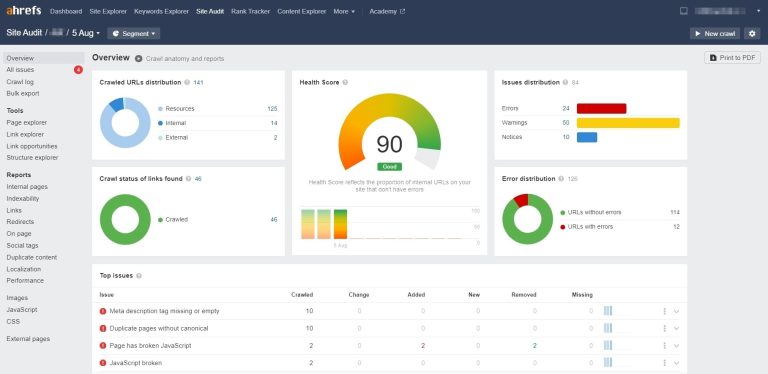
- Use tools (such as Ahrefs, Ubersuggest) to enter competitor URLs and view their popular keywords and traffic sources.
✅ If you have a sufficient budget, you can also include your competitors’ brand keywords in your PPC keyword strategy to capture their traffic and increase brand exposure opportunities.
Choose keyword match types
Once you’ve selected your keywords and are ready to start running ads, you need to understand keyword match types. This is how Google Ads determines the relevance between “user search terms” and “your set keywords.” The broader your match type, the more reach you’ll have, but it might be less precise; the narrower your match type, the less reach you’ll have, but precision increases.
👉See the official introductionAdd keywords
| Match Type | Keyword format | Search reach | Accuracy | Common uses |
| Broad match | air conditioner cleaning | Broadest | Lowest | Initial Testing, Expanding Potential Search Terms |
| Phrase Match | “air conditioner cleaning” | Medium | Medium | Maintain some flexibility but target intent |
| Exact Match | [air conditioner cleaning] | Narrowest | Highest | Precise budget control, targeting the highest conversion opportunities |
Broad Match
When you set a keyword to broad match, Google automatically helps you reach terms with similar or related meanings, and your ad may appear even if users don’t type your exact keyword.
- Format example: air conditioner cleaning
- Possible searches: air conditioner repair, split air conditioner maintenance, home appliance cleaning company
- Suitable scenarios: Want to quickly acquire a large amount of traffic, initial testing of user language for new accounts.
- Notes: Irrelevant clicks are prone to occur. It is recommended to use “negative keywords” to exclude unwanted search terms.
Phrase Match
Your ad will only show if the search term contains this phrase in the exact order, but other words can appear before or after it.
- Format example: “air conditioner cleaning”
- Possible searches: Taipei air conditioner cleaning recommendations, air conditioner cleaning service, air conditioner cleaning cost
- Suitable scenarios: Want to control search intent, but also want to maintain a certain degree of flexibility.
- Notes: If the word order is changed or interfering words are inserted in the search term, the ad may not be triggered.
Exact Match
Ads only appear when the search term is exactly the same as or very similar to the keyword. This is the most precise setting.
- Format example: [air conditioner cleaning]
- Possible searches: air conditioner cleaning, air conditioner maintenance (considered similar terms)
- Suitable scenario: When you have a limited budget and want to focus on searches with the highest conversion probability.
- Notes: This has the smallest reach and is not recommended for standalone use; it needs to be combined with other match types.
Many novice advertisers often think, “The keywords I set aren’t being searched, so why is my ad budget running out so fast?” The problem might be that you’re using the wrong match type. The correct approach is to use broad match to collect data, phrase match to balance exposure and conversions, and exact match to target high-value customers. These three complement each other, forming an ideal strategy.
👉 It is recommended that initial ads use a “broad + phrase” combination, while also adding negative keywords, and continuously optimizing based on actual search term reports.
Keyword Ad Structure
The Google Ads structure is divided into three levels:
| Level | Function Description |
| Account | Managed by a set of Gmail accounts, allowing you to configure payment information and user permissions. |
| Campaign | Determine goals (e.g., traffic, conversions, sales) and set daily budget, regional settings, device targeting, etc. |
| Ad Group | Categorize different services or product categories, and set their respective keywords and corresponding ad copy. |
✅ Practical Application: If you are an interior design company
- Campaign: Interior Design Promotion
- Ad Group 1: Residential Decoration → Keywords “new home design,” “Nordic style decoration”
- Ad Group 2: Commercial Space → Keywords “office design,” “cafe decoration”
This classification not only ensures that the ad copy matches the search intent but also makes it easier for you to track which service generates the most inquiries.
Keyword Ad Copy
Once you have set up your ad structure, you can start writing compelling ad content. Google Search Ads typically display the following fields:
| Ad Slot | Description | Writing Suggestions |
| Headline | The most prominent first line of text, up to 15 headlines, with a maximum of 30 single-byte characters per segment. | Include keywords, numbers, and calls to action (e.g., “Free Estimate”). |
| Description | Supplements the headline, explains service value or attractive incentives, up to 4 descriptions, with a maximum of 90 single-byte characters per segment. | Emphasize solutions, service features, and positive feedback. |
| Display URL | The URL presented to the user, with a customizable path (e.g., yoursite.com/design). | Concise, thematically relevant. |
| Final URL | The actual webpage URL that users are directed to after clicking. | It is recommended to direct users to the corresponding service page, not always back to the homepage. |
| Ad Extensions | Additional links, phone numbers, addresses, offers, etc. | Increase click-through rate and enhance brand credibility. |
✅ Practical Application: If you are an interior design company, you can plan your ad copy like this:
- Headline 1: Nordic Style New Home Design|Professional Space Planning
- Headline 2: Free Measurement & Quote|Construction Only After Satisfaction
- Headline 3: Top Choice for Interior Designers
- Description: Dedicated personnel visit for measurements, free 3D simulation drawings, create a quality living space within budget, book now!
- Display URL: yourdesign.com/nordic-style-interior-design
Further reading: PPC Keyword Advertising vs. SEO Search Engine Optimization: Which is Better for Your Marketing Strategy?
When you plan to increase website exposure and attract potential customers, you might encounter a classic question:Should I do SEO or invest in PPC keyword advertising?Both methods play important roles in digital marketing, but their purposes, effects, and return on investment are distinctly different.
What is PPC? What is SEO?
- PPC (Pay-Per-Click) Keyword Advertising: You pay for “each click” and purchase exposure opportunities for specific keywords through platforms like Google Ads, allowing your ads to appear at the top of search results, usually marked as “Ad.”
- SEO (Search Engine Optimization): A series of techniques and content strategies to naturally improve website rankings, aiming to appear in the organic section of search results (non-paid) to increase long-term exposure and trust.
| Comparison Items | PPC Keyword Advertising | SEO Search Engine Optimization |
| Time to Results | Fast results, usually live within hours. | Takes 1-3 months or more to see significant ranking improvements. |
| Traffic Stability | Traffic immediately drops to zero once ads stop running. | Can continuously gain organic traffic once established. |
| Cost Structure | Pay-per-click, CPC is expensive when competition is high. | Requires initial investment in content and technology, but no per-click fees. |
| Suitable Goals | Quickly promote new products, short-term promotions, clear inventory. | Establish long-term brand content strategy, expand organic exposure. |
| Ranking Position | Immediate exposure at the top of search results | Usually appears below ads, natural ranking |
In fact, the most successful digital marketing strategies often combine SEO and PPC. PPC is like a short sprint, while SEO is like a marathon. This approach maximizes the advantages of both: you can use PPC to test keywords with high conversion rates, and then invest resources in long-term SEO planning. Before SEO rankings stabilize, use PPC to gain traffic and inquiries.
👉 For example, you can first use PPC to run “air conditioner cleaning” ads, observe clicks and inquiries, and then plan corresponding SEO content based on actual search terms (e.g., “How much does air conditioner cleaning cost?”, “How often should an air conditioner be cleaned?”)
Summary: Building a successful search marketing strategy starts with choosing the right keywords
In the digital age, whether it’s running Google keyword ads (PPC) or optimizing website SEO, “choosing the right keywords” is the starting point for everything. Successful search marketing is not just about throwing money at it; it’s built on clear logic, data analysis, and continuous optimization. By starting with the right keywords and then delivering the correct content or ads to your target audience, you will not only increase exposure but also truly generate inquiries, orders, and even long-term brand influence.
Frequently Asked Questions
Why Should Businesses Prioritize Google Keyword Ads?
Because Google Keyword Ads can precisely target customers with clear search intent, bringing high-conversion potential traffic. They offer budget flexibility, allowing ads to run for as little as NT$200 per day, and provide comprehensive data reports (CTR, CPC, conversions) for quick testing and optimization.
Which Industries Are Most Suitable for Google Keyword Ads?
They are particularly suitable for local services (such as plumbing, cleaning), online courses and digital products, B2B solutions, and e-commerce/brand products. The commonality among these industries is that users actively search, and the conversion rate is high.
How to Select Keywords Effectively?
Keywords are categorized into brand, general, long-tail, and question-based types. Brand and general keywords usually have high conversion rates and are suitable for ad mainstays; while long-tail and question-based keywords have low search volume, their intent is clear, allowing for early exposure in the search process. They can be selected in conjunction with Google Keyword Planner and competitor analysis.
What Are the Differences in Google Ads Keyword Match Types?
Match types include: broad match (high traffic but low precision), phrase match (balances exposure and intent), and exact match (most precise but smallest reach). It is recommended to combine broad and phrase match, and use negative keywords, gradually optimizing through data.
How to Plan the Google Ads Account Structure?
The structure is divided into three layers: Account (sets payment and permissions), Campaigns (determines goals, budget, region), and Ad Groups (categorized by product or service, corresponding to different keywords and ad copy). For example, an interior design company can be divided into ‘Residential Decoration’ and ‘Commercial Space’ groups, each running different keywords.
What Is the Difference Between PPC Ads and SEO?
PPC (keyword advertising) yields quick results, providing immediate exposure, but traffic drops to zero once paused, and payment is based on clicks. SEO, on the other hand, takes 1–3 months to show results but builds long-term organic traffic and brand trust. The best strategy is to run PPC and SEO in parallel: use PPC to test keywords, then invest in SEO for long-term planning.